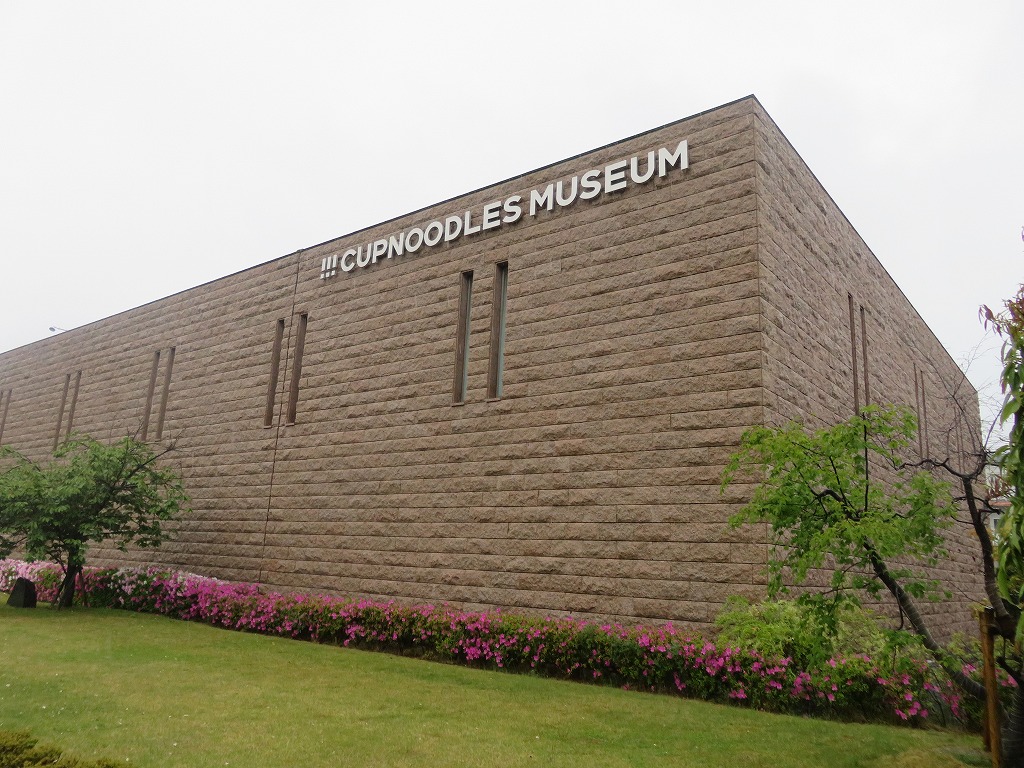
Cupnoodles Museum
Since the Expo 2025 Osaka, Kansai has concluded, many people may still be visiting the Osaka area, and I would like to recommend the “Cupnoodles Museum” as a must-visit spot alongside “Expo ’70 Commemorative Park.”
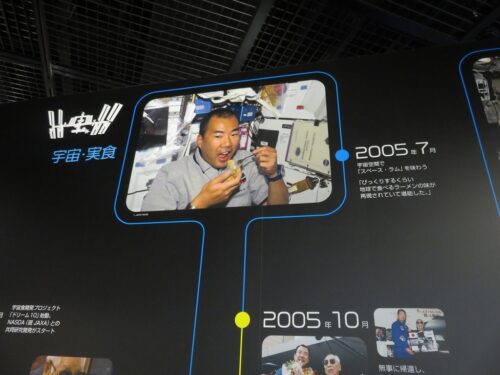
Cup Noodles is an instant ramen launched by Nissin Foods in 1971 as the world’s first cup-type instant noodles.This innovative food, which can be easily eaten anytime and anywhere just by adding hot water, spread throughout the world in no time, and it has even gone beyond Earth to become space food.
Momofuku Ando, the inventor of Cup Noodles, was the model for a popular morning TV drama.
This is a story modeled after Momofuku Ando, the founder of Nissin Foods who developed the world’s first instant ramen, and his wife. (Cast: Sakura Ando, Hiroki Hasegawa)
The Cupnoodles Museum offers many exhibits and several hands-on experience corners. Admission to the museum is free, but a participation fee is required for the experiences, and some can be reserved in advance. This time, I made a reservation for one of the activities, the “Chicken Ramen Factory,” and participated.
Chicken Ramen Factory
The Experience of Making Noodles from Flour (70 minutes)
Reservation is required, and the fee is 1,000 yen for adults (600 yen for elementary school students and younger). It takes place in a large kitchen structured like a school’s home economics room.
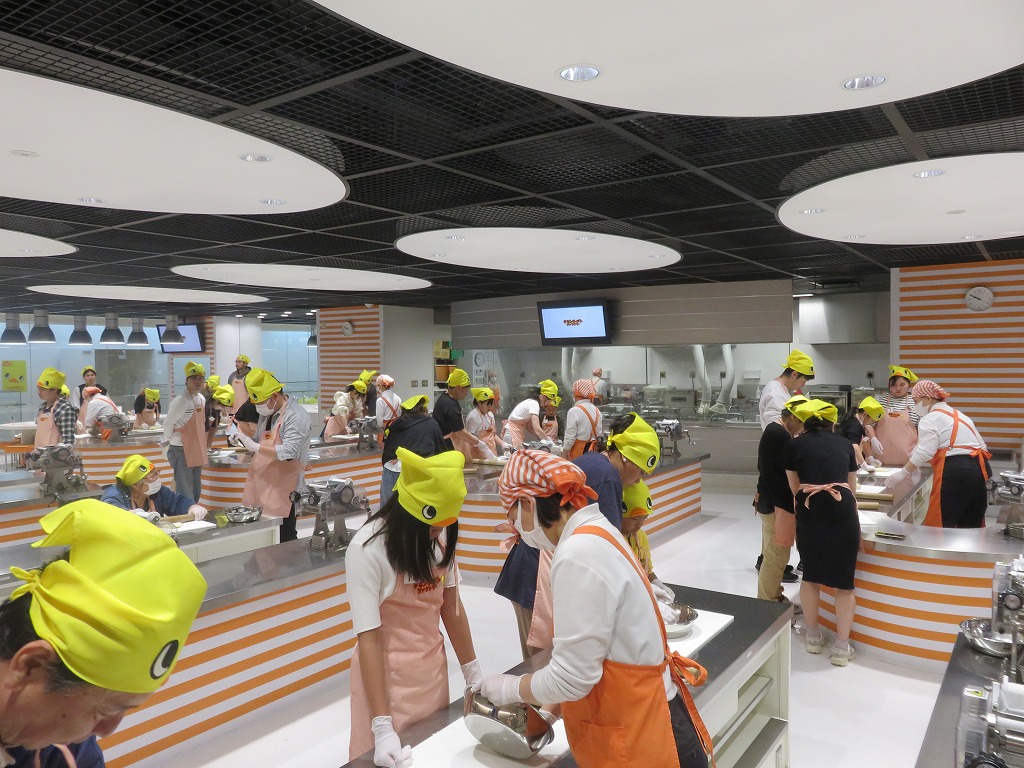
In the large cooking room, which can accommodate up to 48 people, an instructor is assigned to each group to check and assist. Aprons are provided during the work, and you can take home the “Hiyoko-chan” (the brand’s chick mascot) bandana at the end.
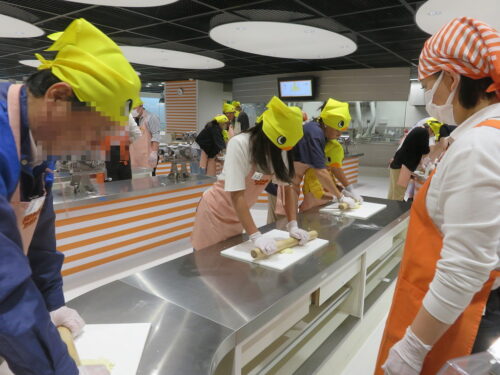
This is the scene where we are rolling out the dough with a rolling pin. It includes authentic noodle-making processes.
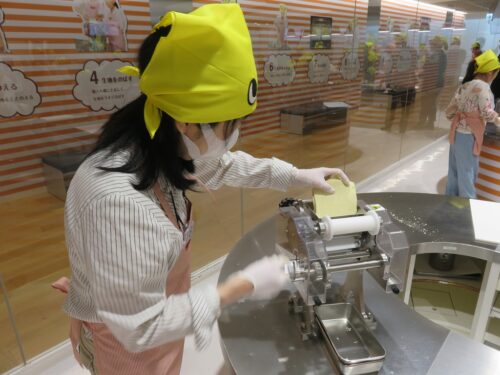
Insert the dough into the noodle machine to adjust its thickness.
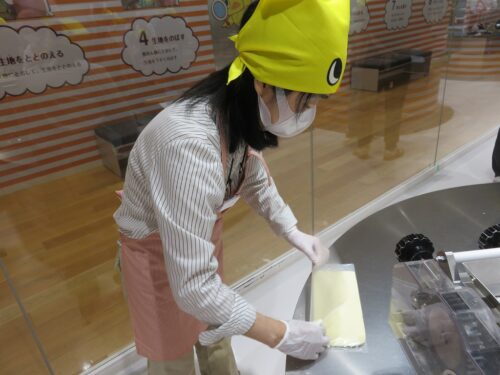
Put the rolled dough into a bag and let it age (rest to improve texture).
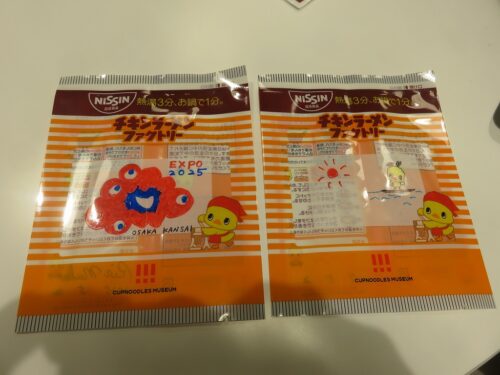
During this time, we draw dates and illustrations on the packaging of the bag noodles.
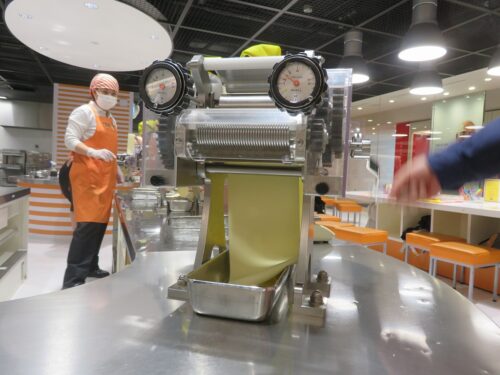
The aged dough is rolled out thinly using the noodle machine. After repeating this several times, the noodles are finally cut out.
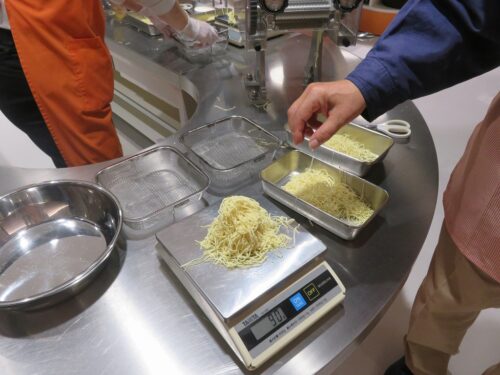
Measure 100g of noodles for one serving and place them in a colander. After a staff member hand-kneads them to add waves (curls), the noodles are placed in a steamer along with the colander to be steamed.
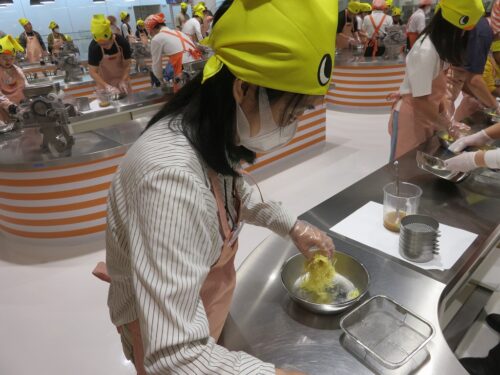
Sesame oil is added to the steamed noodles to loosen them well, and then soup is added for seasoning. The noodles are then loosely placed into a circular metal container.
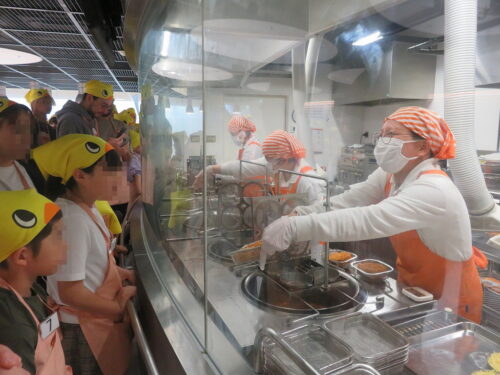
A staff member deep-fries it in oil. Participants can observe this process through a glass window. While the majority of participants are children and their parents, foreign tourists were also participating.
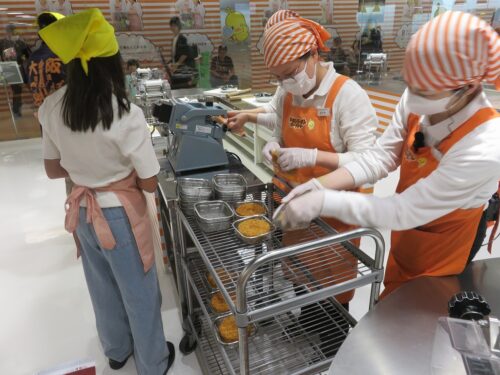
Once the noodles are fried, dried, and cooled, they are packed into bags.
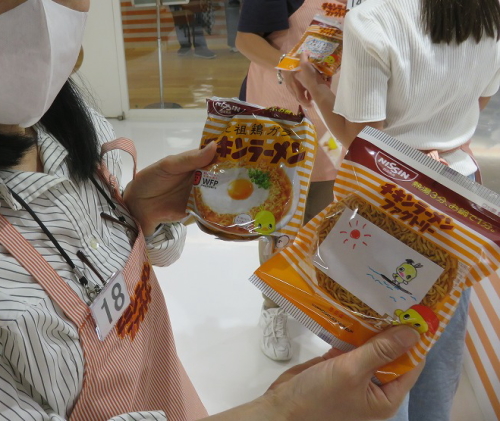
You can take home the bag of noodles you made yourself along with a standard factory-made product. We were told to compare and check the difference in taste.
The workflow at the Chicken Ramen Factory
Instant Ramen Tunnel
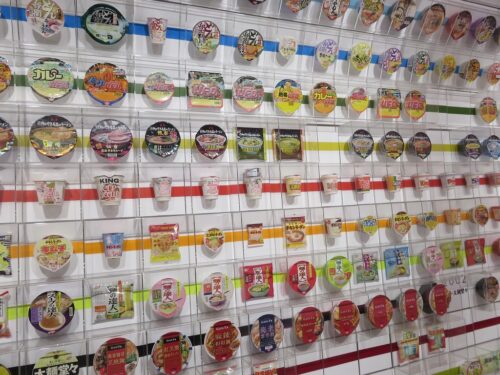
This exhibit features the history of instant ramen that began with “Chicken Ramen.” It is composed of approximately 800 different product packages.
My Cupnoodles Factory
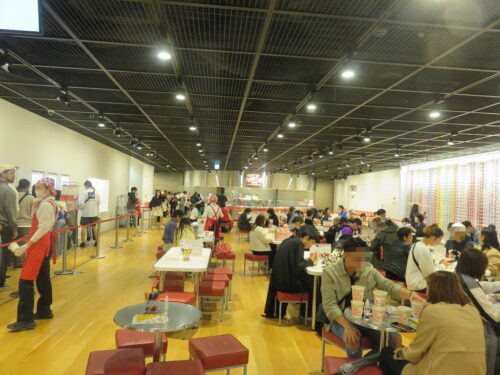
A workshop where you can create your one-and-only original “Cup Noodles” in the world. You can experience this for 500 yen per cup.
The Birth of Chicken Ramen
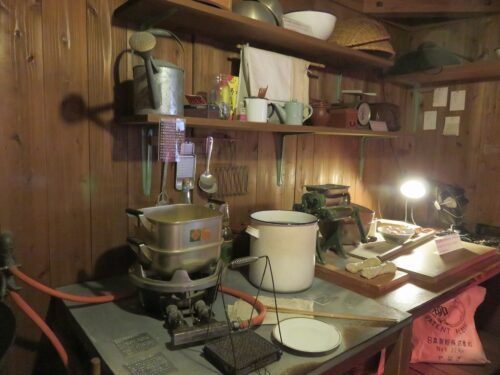
The research shack where “Chicken Ramen” was born has been faithfully recreated.
Cross-section Model of Cup Noodles
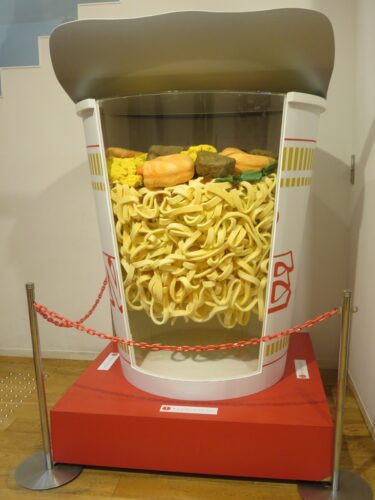
The noodles are floating in the middle of the container. This is called the “Middle Suspension Structure”; by having the noodles float away from the bottom of the cup, they are protected from vibrations during transportation, making them harder to break. Additionally, when you open the lid, the toppings are at the top, which has the effect of making it look delicious. Furthermore, if you look closely, the noodles become denser as they go higher. This is called the “Sparse-to-Dense Noodle Mass Structure.” By doing this, hot water convects more easily, allowing heat to spread evenly and resulting in a delicious meal.
In addition to these, there are many other exhibits. Original goods from the “Cupnoodles Museum” are also for sale. It was an amusement facility slightly different from a standard factory tour, and as its name suggests, it had a strong museum element. The same facility is also located in Yokohama, so if you are visiting from the Kanto area (Eastern Japan), that one is closer.
Location: 8-25 Masumi-cho, Ikeda City, Osaka Prefecture
Opening Hours: 9:30–16:30 (Last admission at 15:30)
Closed: Tuesdays (If Tuesday is a national holiday, the following day is closed) and New Year holidays