Sencha: A Guide to Brewing this Popular Japanese Green Tea and the Use of the “Chakoboshi”
While “Matcha” is world-renowned as the symbol of Japanese tea, “Sencha” is actually the most beloved and commonly enjoyed variety within Japan.
Sencha is the quintessential Japanese green tea, served both as a gesture of hospitality (Omotenashi) and as a refreshing accompaniment to daily meals. Although you will encounter Sencha frequently while traveling in Japan, its true charm is often overlooked. However, when brewed correctly, the exquisite flavor of Sencha is enough to captivate anyone.
What is Sencha?
The difference from Matcha lies in the cultivation and preparation.
Both Sencha and Matcha come from the leaves of the Camellia sinensis plant. However, their production processes are entirely different.
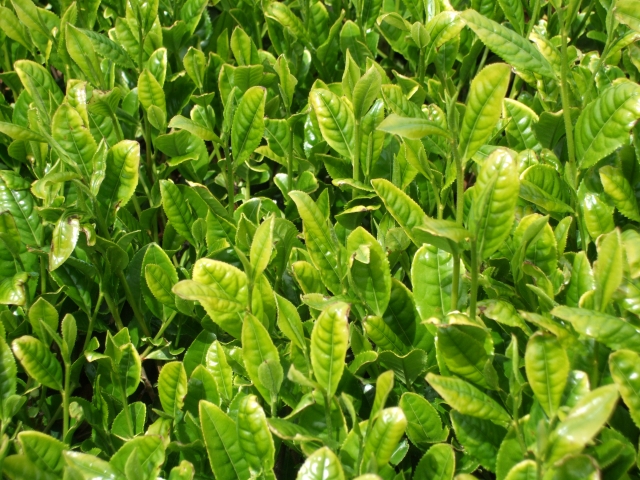
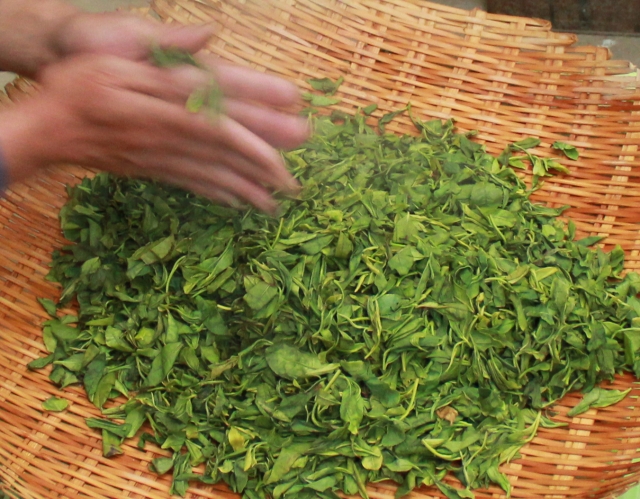
Sencha is made by steaming the tea leaves to prevent oxidation, rolling them repeatedly, and then drying them.
In contrast, Matcha is made from leaves grown in the shade (to enhance sweetness), which are then dried without rolling and ground into a fine powder using a stone mill.
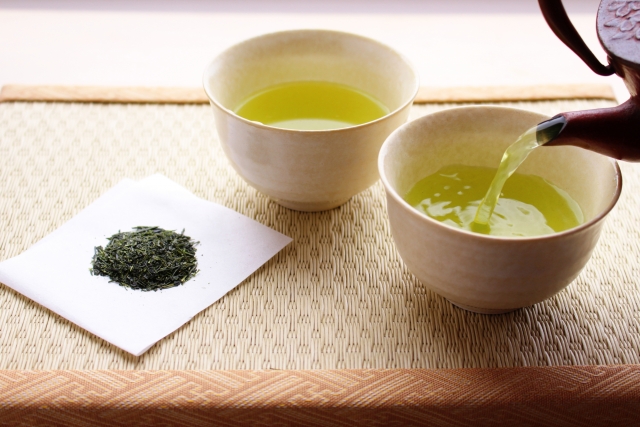
The brewing methods also differ: while Matcha is whisked with a bamboo whisk (Chasen), Sencha is steeped using a teapot (Kyusu).
Traditional tools for brewing sencha
Made in a Kyusu and drunk in aYunimi
When staying at a traditional Japanese inn (Ryokan), you will often find a tea set arranged in a dedicated container called a Chahitsu (tea chest).
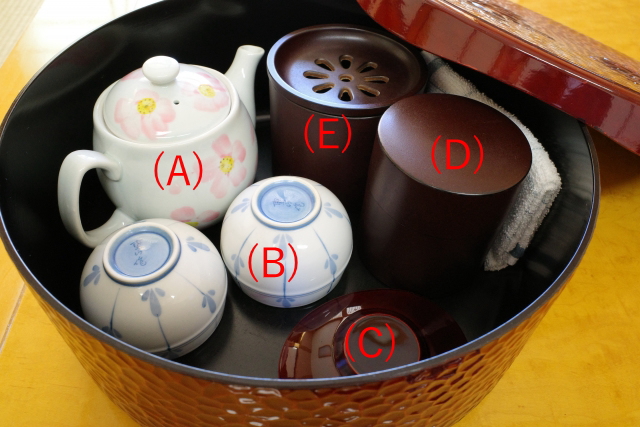
The lidded container is called a “hitsu,” and the “chabitsu” (tea box) contains everything you need for tea.
Typically, it contains:
(A) Kyusu (Teapot)
(B) Yunomi (Tea cups)
(C) Chataku (Coasters/Saucers)
(D) Ocha-ire (Tea canister)
(E) Chakoboshi (Waste water receptacle)
To prepare the tea, place the leaves in the Kyusu, pour in slightly cooled hot water, and serve the tea in Yunomi placed on Chataku. The Chataku allows you to serve the tea elegantly without touching the hot cup directly.
The Chakoboshi is a vessel used to discard excess tea or used leaves. This ensures that the second steeping remains fresh and flavorful.
How to Brew the Perfect Sencha
Temperature is Key
encha is a delicate balance of refreshing aroma, umami, sweetness, and a pleasant astringency. The secret to bringing out these flavors lies in the water temperature.
-
High-grade Sencha: approx. 70°C (158°F)
-
Standard Sencha: 80–90°C (176–194°F)
To brew sencha smoothly, it is convenient to have a thermal carafe and freshly boiled water ready.
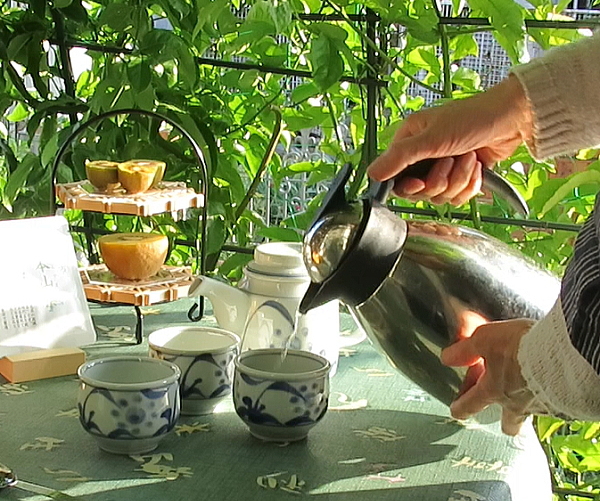
1. Pour hot water into the tea cups
cups (Yunomi) as the number of guests, and fill each one about 80% full with boiling water.
This step serves three important purposes:
-
Pre-warming: It warms the cups so the tea doesn’t cool down too quickly.
-
Temperature Control: It naturally cools the boiling water to the ideal brewing temperature.
-
Measuring: By using the cups themselves, you can measure the exact amount of water needed for the pot without any waste.
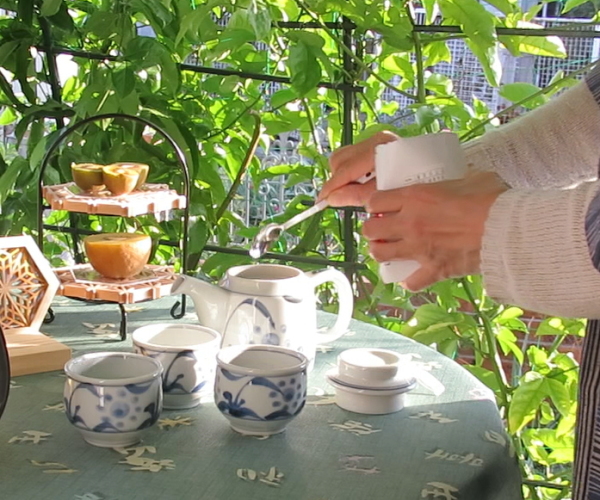
2. Add tea leaves to the Kyusu
Use about one teaspoon (2–3g) of tea leaves per person.
3. Pour the water from the cups into the Kyusu
Once the water in the cups has reached the right temperature, pour it into the Kyusu. Close the lid and wait for 1 to 2 minutes without shaking the pot.
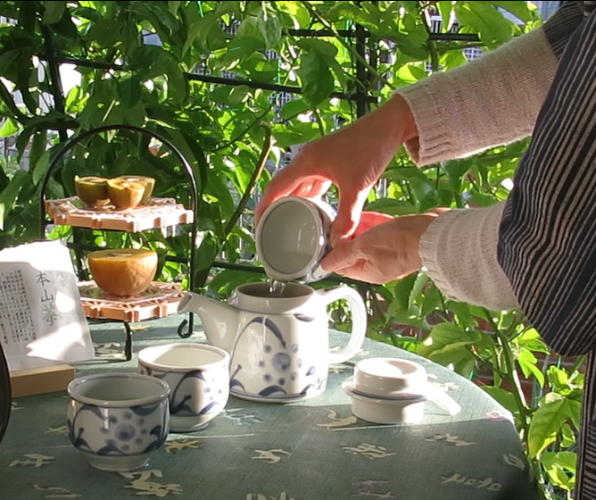
4. Pour the tea evenly (Mawashi-tsugi)
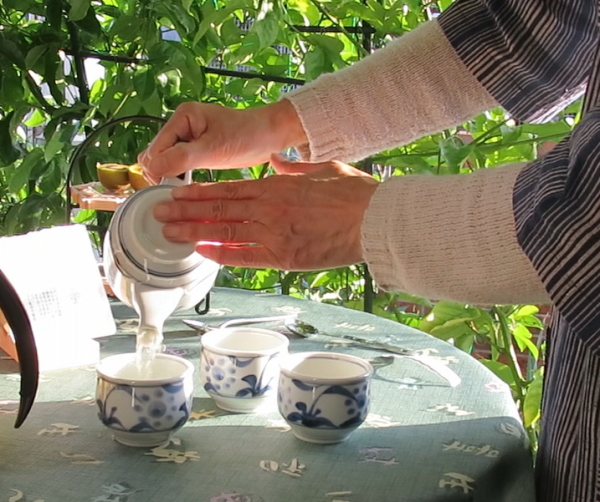
Pour a small amount of tea into each cup in sequence (for example, cup 1-2-3, then 3-2-1). Repeat this cycle several times until each cup is filled to the desired level.
This technique, called Mawashi-tsugi, is essential to ensure that both the strength and the quantity of the tea are perfectly uniform for every guest.
Be sure to pour until the very last drop—this final concentration of flavor is often called the “golden drop.” Afterwards, ensure no liquid remains in the pot, discarding any excess into the Chakoboshi. This keeps the tea leaves from becoming soggy and bitter, ensuring the second infusion will be just as delicious.
The Role of the Chakoboshi
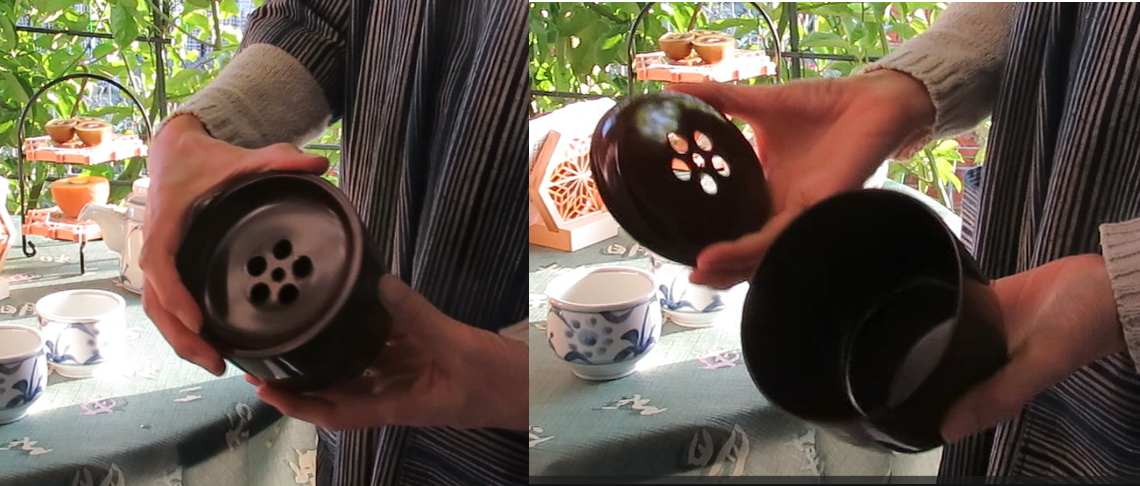
The lid with holes has an important role.
The Chakoboshi consists of a main vessel and a perforated lid. Its primary role is to hold the water used for rinsing cups or the discarded tea leaves. The lid prevents splashing and keeps the discarded contents out of sight, maintaining the beauty of the tea setting.
How to discard used tea leaves
After enjoying the second infusion, discard the used tea leaves from the kyusu into the chakoboshi.
First, pour some hot water into the kyusu.
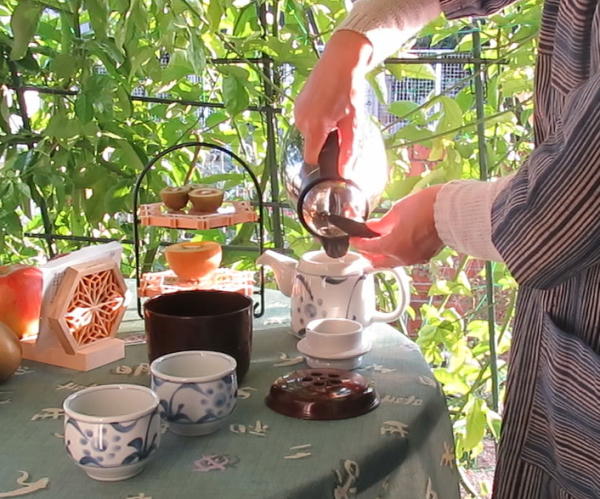
Gently swirl the kyusu so the tea leaves clinging to the sides are incorporated into the water.
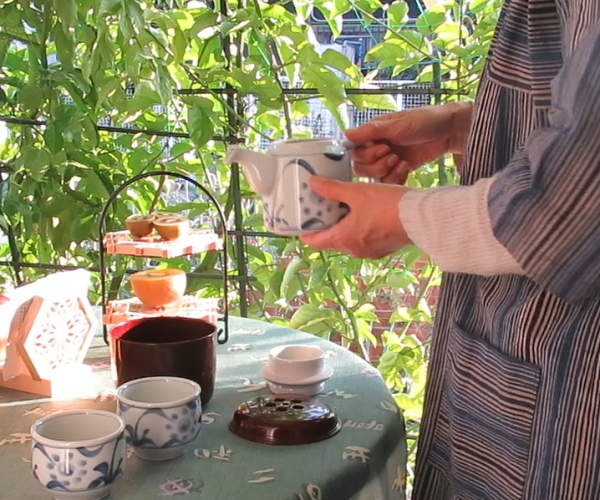
Remove the lid of the chakoboshi and discard the tea leaves along with the water.
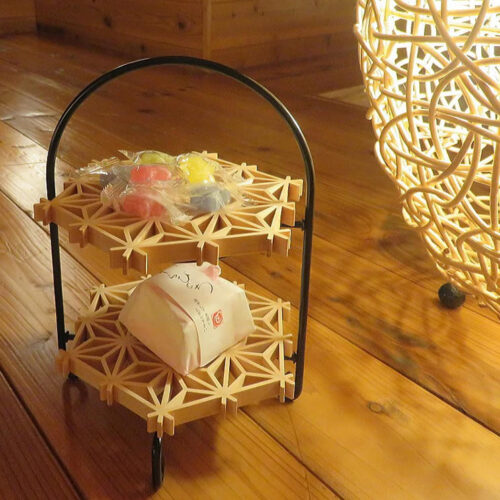
Kumiko cake stand >
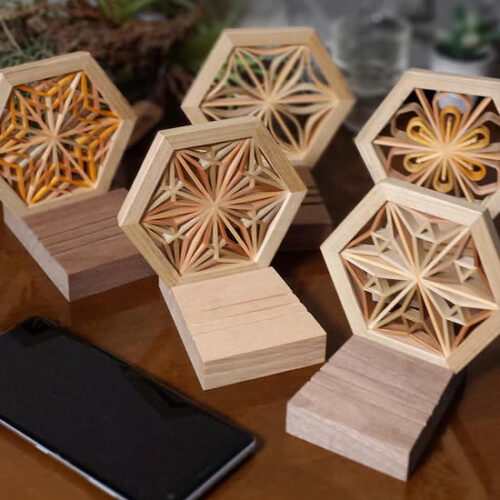
Kumiko Smartphone Stand – Type B – >
We will introduce the role of tea spills in a four-panel comic.
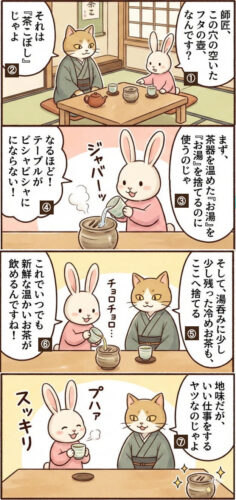
1)”Master, what is this jar with the holes in the lid?”
2)”That is a ‘Chakoboshi‘ (tea-waste container).”
3)”First, it is used to discard the hot water used for warming the teaware.”
4)”I see! That way the table doesn’t get soaking wet!”
5)”And you also pour any leftover cold tea from your cup into it.”
6)”So you can always enjoy a fresh, hot cup of tea!”
7)”It’s a humble tool, but it does its job well.”