Takigino (Noh Performance by Bonfire)
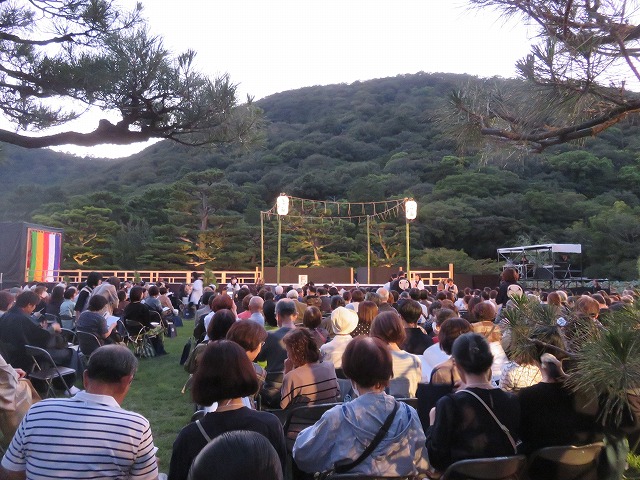
On October 10, 2025, a special “Takigino” performance was held at Ritsurin Garden. This stage was organized to commemorate the 150th anniversary of Ritsurin Garden’s opening, featuring three Living National Treasures as distinguished performers. Unlike performances in indoor Noh theaters, Noh performed outdoors while burning bonfires creates a unique atmosphere. This setting seemed to further deepen the world of “Yugen,” the subtle and profound beauty of traditional Japanese aesthetics.
What is Takigino?
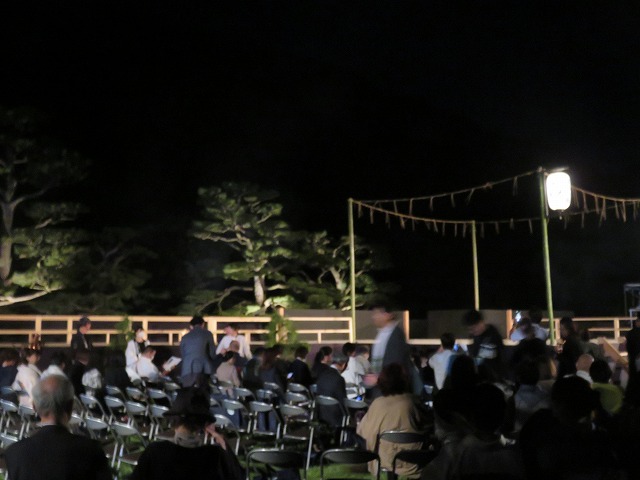
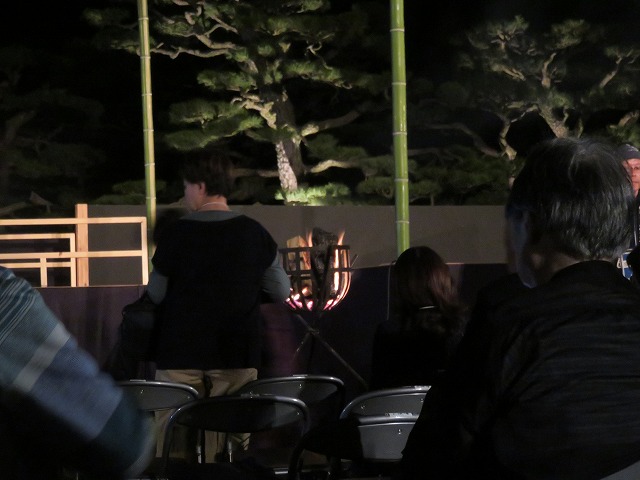
Noh stage lit by bonfires
The origin of Takigino is said to be a Shinto ritual where Noh was dedicated under the sacred fire of burning firewood during the “Shuniee” ceremony at Kofuku-ji Temple in Nara. The term has since broadened its meaning and is now used as a general term for Noh and Kyogen performances held at night on temporary outdoor stages surrounded by blazing bonfires.
Behind the Scenes
I decided to visit the park, which served as the venue, earlier than the opening time to take a look behind the scenes.
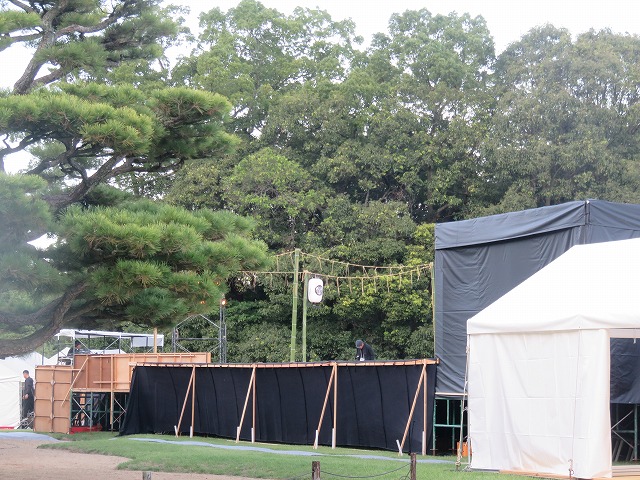
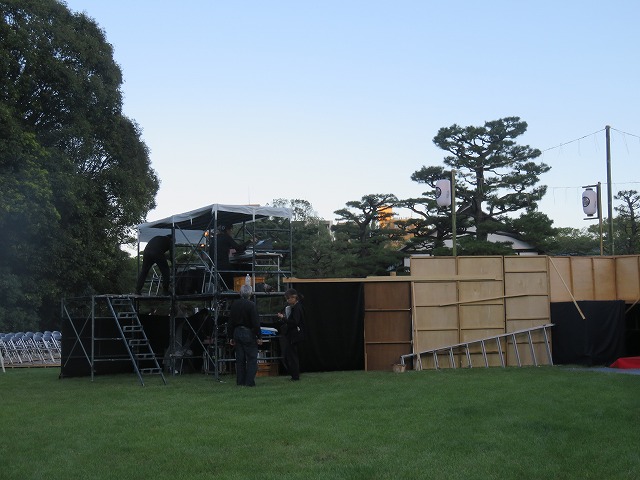
Stage: Ritsurin Garden
A vast park designated as a special scenic spot
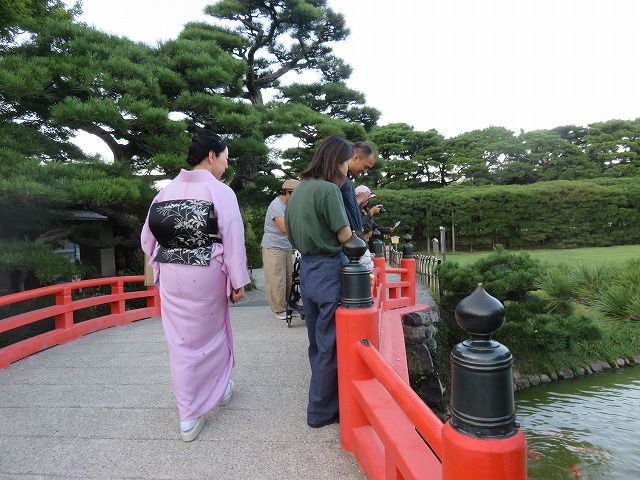
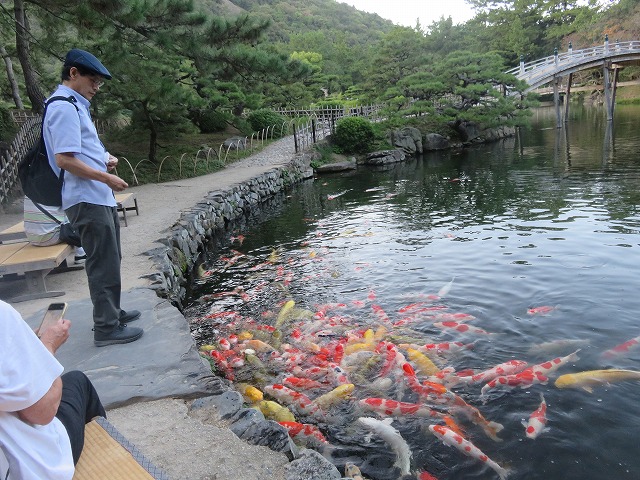
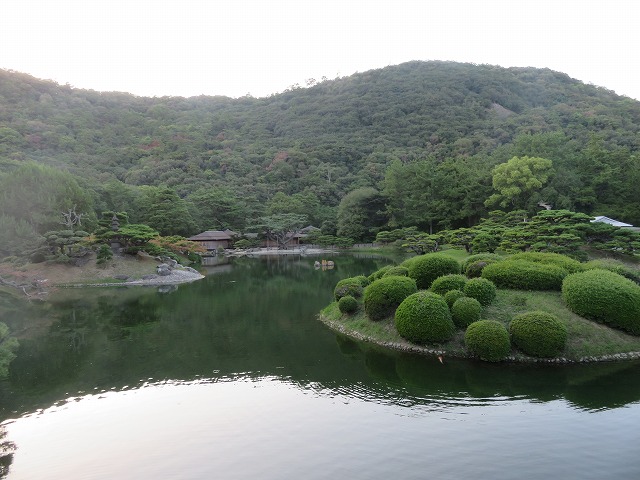
Ritsurin Garden, the stage for the Takigino performance, is located in Takamatsu City, Kagawa Prefecture. It is the largest cultural property garden designated as a Special Place of Scenic Beauty in Japan.
The garden was completed nearly 300 years ago, having been repeatedly renovated by successive lords of the Matsudaira family of the Takamatsu Domain as their villa. The landscaping style, featuring ponds and artificial hills across a vast site, is called “Chisen Kaiyu-shiki” (strolling pond garden style), allowing visitors to enjoy the ever-changing scenery while walking through the park.
Authentic “Byobu-matsu” (Screen Pine Tree)
Beautiful illuminated pine tree
The Noh stage is constructed with only four pillars, and the background features the natural “Byobu-matsu” (Screen Pine Trees) growing in Ritsurin Garden, which are highlighted by beautiful illumination. The sight is incredibly beautiful and creates a truly mystical atmosphere.
Souvenirs and Goods Sales
Memorable items
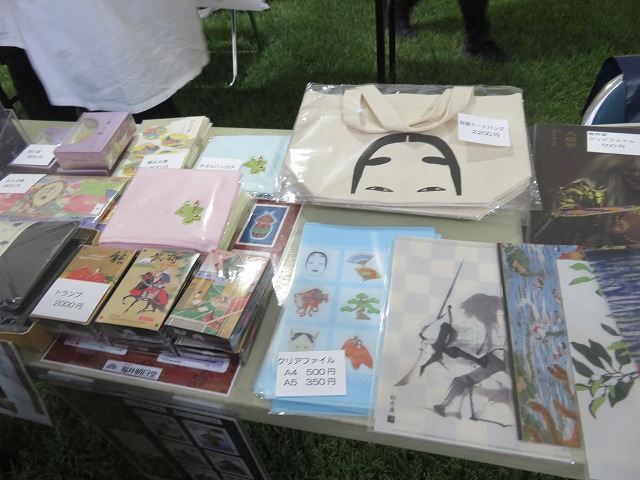
Near the reception, there is a section for goods sales, much like a typical concert.
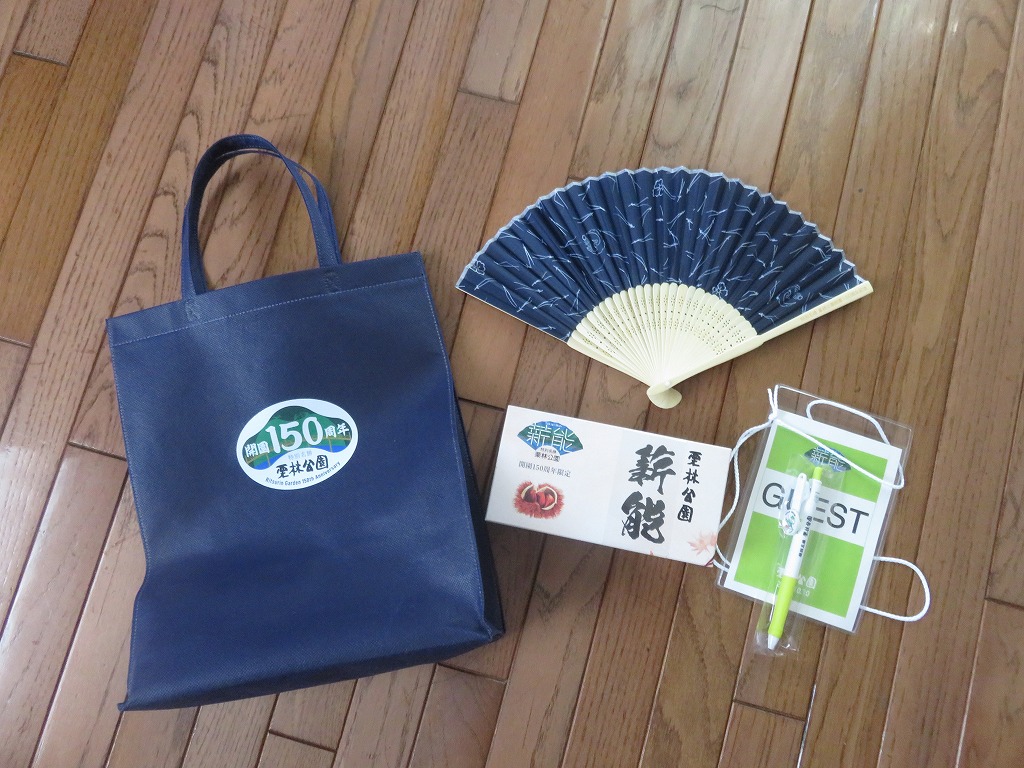
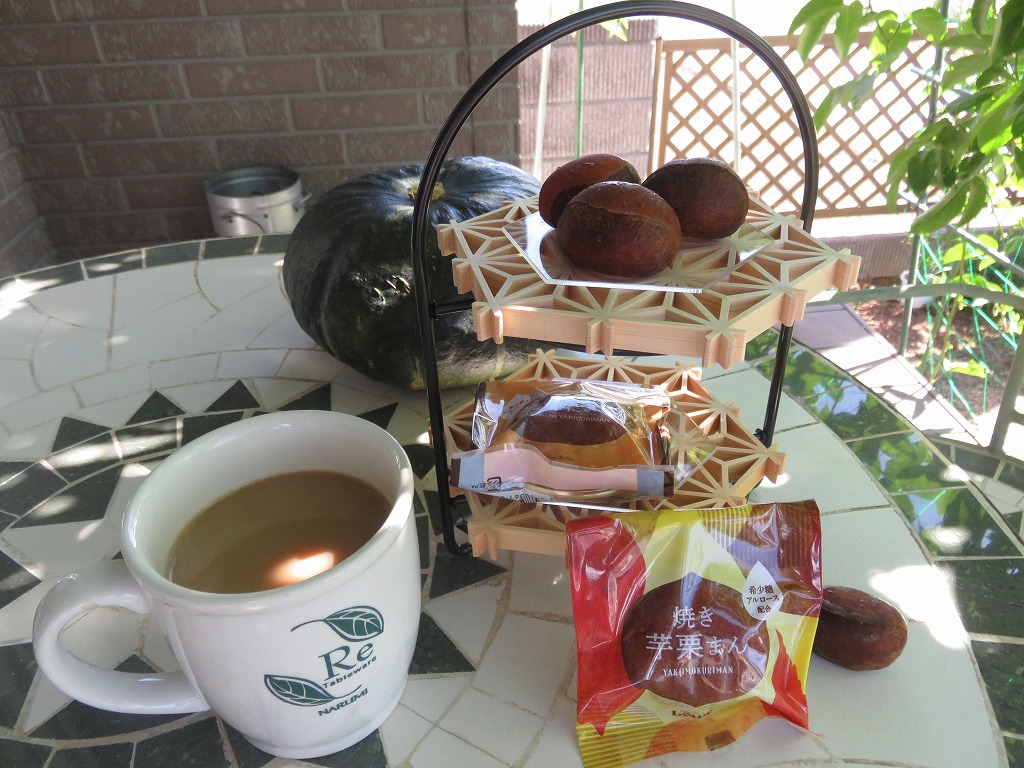
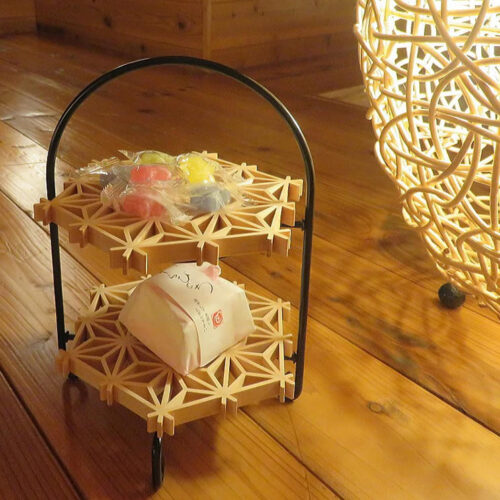
I’m not sure if it’s always the case, but perhaps because this time was the 150th-anniversary commemorative event, I received these commemorative gifts upon entry. The box of sweets in the center is “Sanuki no Yakiguri-man” and “Yakiimo Kuri-man” from the confectionery workshop “Lowe.”
Kumiko cake stand >
Program
Shimai: “Yashima”
“Yashima” is a major Noh play consisting of two acts, but this time, its essence was performed in the “Shimai” format (a short, highlight dance performed without masks or full costumes).
Overview
 A group of traveling monks from the capital arrives at Yashima-no-ura in Sanuki Province. At dusk, they encounter an old man who earns a meager living by boiling seawater to make salt (known as a “Shioyaki”). When they ask for a night’s lodging, the old man, feeling a nostalgic connection to people from the capital, warmly agrees.
In response to the monks’ questions, the old man recounts vivid anecdotes of the Genpei War that took place on these shores, such as the “Shikoro-biki” (helmet-pulling) and “Yumi-nagashi” (the incident of the dropped bow). He then hints that he is the ghost of the heroic warrior Minamoto no Yoshitsune and vanishes into the waves.
Noh: “Ama”
Next, the full Noh play “Ama” (The Female Diver) was performed.
Overview
 Minister Fusasaki visits Shido-no-ura in Sanuki Province to hold a memorial service for his deceased mother. There, he meets a female diver (Ama) who reveals she was his mother and sacrificed her life to retrieve a sacred jewel stolen by the Dragon Palace. As the Minister performs the memorial service, the mother (the diver) appears in the form of a Dragon Goddess and performs a sacred dance.
Kyogen: “Shimizu”
The atmosphere on stage shifts dramatically as the Kyogen performance begins. “Shimizu” (Spring Water) was presented.
Overview
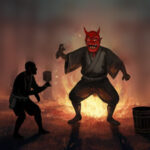 The master presents his family heirloom, a precious wooden bucket, and orders his servant, Taro Kaja, to fetch water from a famous spring called “Shimizu” for a tea ceremony. Although Taro Kaja hesitates, claiming a demon appears there, his master insists, and he reluctantly departs.
Upon returning, Taro Kaja makes a scene, claiming he was attacked by a demon and lost the bucket. However, the master, unwilling to lose his precious heirloom, decides to go retrieve it himself.
Panicked, Taro Kaja gets ahead of him, dons a demon mask, and tries to scare his master. However, as he repeatedly plays the prank, he is eventually exposed, making this a humorous and laughter-filled play.
Shugennoh: “Takasago”
To conclude the event, the “Shugennoh” (celebratory Noh) play “Takasago” was performed, serving as a perfect finale.
Overview
 During the reign of Emperor Daigo, Tomonari, a priest of Aso Shrine, stops at Takasago-no-ura in Harima Province on his way to the capital. There, an elderly couple appears, sweeping the ground under the pine trees. They reveal themselves as the spirits of the Takasago and Sumiyoshi pine trees, known as the “Aioi-no-matsu” (Paired Pines). After praising the flourishing world of waka poetry by likening it to the pine trees, the couple departs for the open sea in a small boat. Tomonari and his party also head to Sumiyoshi, where the Sumiyoshi Deity appears to perform a dance, celebrating the peace and eternal blessings of the world.
The Takigino performance held at Ritsurin Garden was an experience that truly invited us into the world of “Yugen.” It was made possible by the perfect alignment of the local-themed programs, the historic setting of Ritsurin Garden with its magnificent pine trees, and the evocative atmosphere of a long autumn night.
Even for modern Japanese people, classical performing arts often feel intimidating or difficult to approach.While I haven’t yet reached the stage of fully “understanding” it, being able to immerse myself in an elegant and profound world—rarely found in daily life—was a precious experience.